The Issue
The form of nutrient and the rate of application are key components of best practice nutrient management. They are critical inputs into decisions that affect both productivity and environmental risk. Fertilizers can contain a wide range of concentrations of various forms of nutrients. Consistent description of nutrient form and content allows informed decision making.
Fertilizers can also contain impurities from the raw material or manufacturing process. Some of these can present a risk to plant health, human health and food safety.
State Governments have developed regulations to manage description and safety of fertilizers. There are many differences in the detail of the various State regulations, but all have the intention of providing consistent information to users, and managing risks.
Many companies operate in multiple States with product regularly moved between States. This makes it difficult to manage compliance with the regulations where there are differences between the State requirements.
 Fertilizer Australia Response
Working with the states, Fertilizer Australia developed a National COP for Fertilizer Description and Labelling. The COP was based on the strictest requirements of the various State regulations. It allows for consistent information to be provided to users.
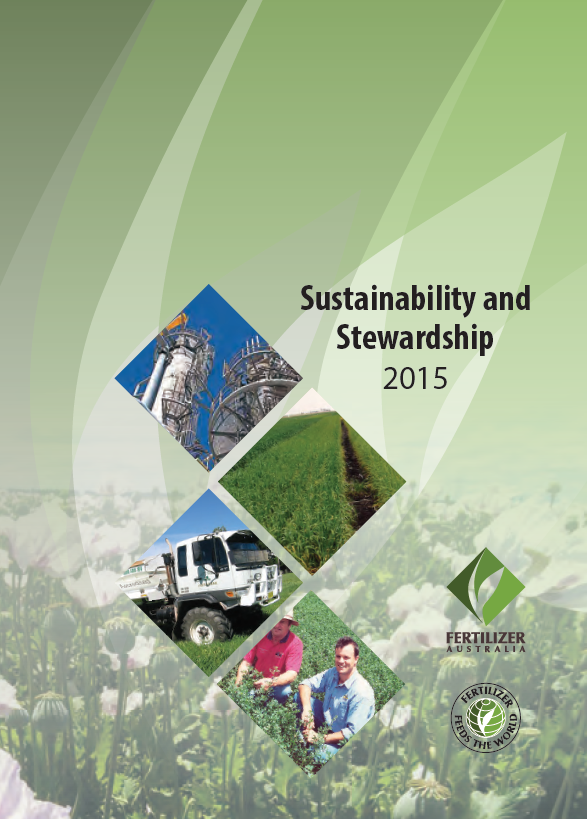
Details of how members of Fertilizer Australia are performing in managing environmental issues can be found in the Sustainability and Stewardship Report. To access the report click on the image at left.
Arsenic
Domestic manufacturing of single superphosphate (SSP) declined significantly in 2025. Given Australia will be importing a large proportion of the SSP used in the future, the industry thought it prudent to consider the risks associated with this change.
Australian manufactured SSP has low arsenic (As) levels (typically 50 – 117 mg As / kg P), while some imported SSP show higher concentrations (up to 489 mg As / kg P). Boronated fertilizers vary widely, with some sources having higher arsenic levels.
After seeking expert advice on arsenic and a range of other impurities, Fertilizer Australia decided to include arsenic as an impurity of concern in the Fertilizer Description and Labelling code of Practice (CoP). A number of other related changes including setting a arsenic maximum permissible concentration, concentrations which trigger the arsenic content to be stated on the label and warning statements etc. The CoP changes are marked in purple in National Code of Practice for Fertilizer Descriptions and Labelling Draft.pdf in the resources section below.
Prior to formally implementing these changes, Fertilizer Australia will advise each of the States about the proposed changes to the CoP and the reasons for the change.
A 5 minute video can be FOUND HERE which outlines the key arsenic issues and the proposed changes to the CoP.
Resources
National Code of Practice for Fertilizer Description and Labelling.pdf
National Code of Practice for Fertilizer Description and Labelling Draft.pdf
Australian Government Sites Relevant to Fertilizer